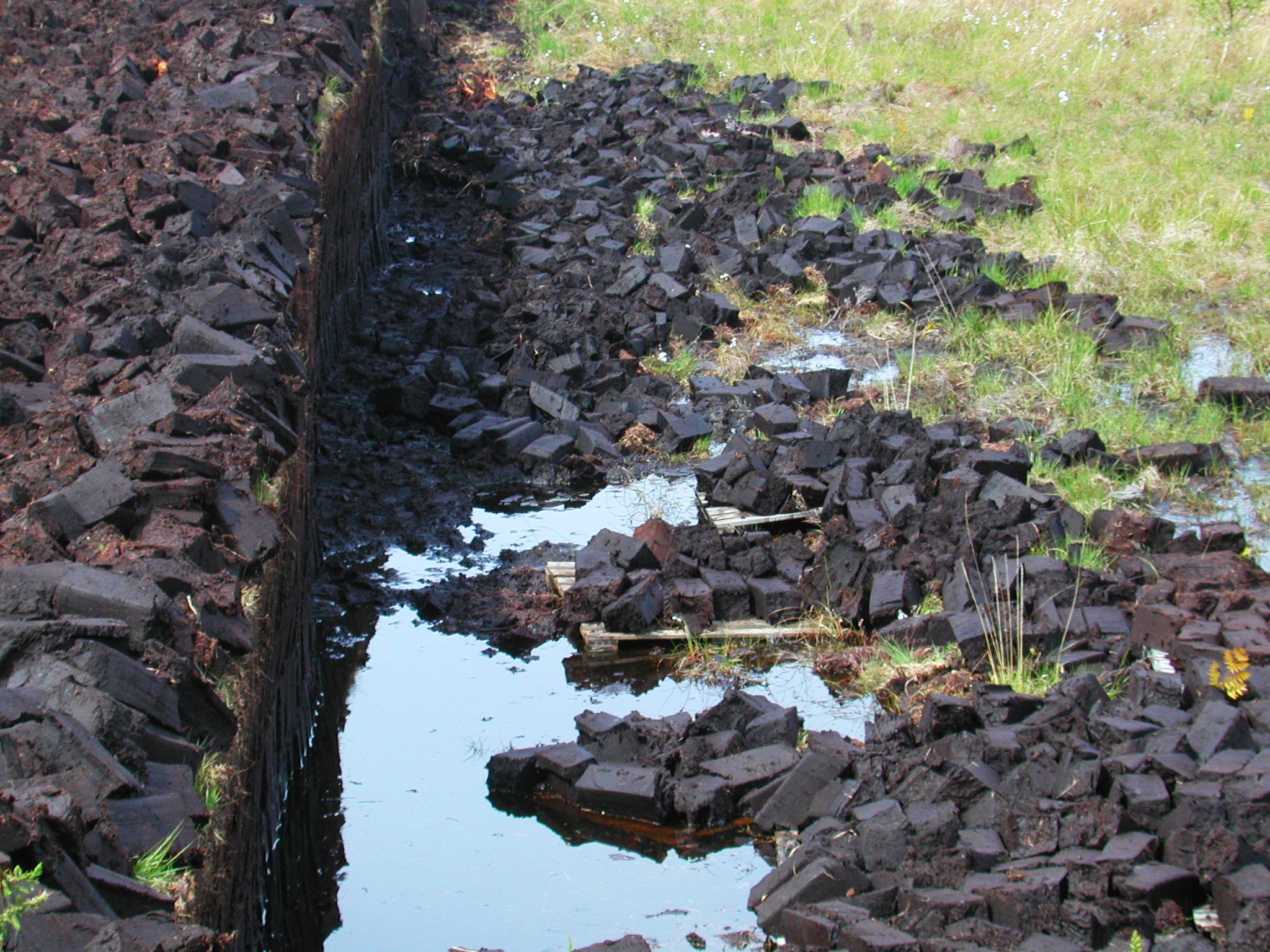
Peat in the Mazovian lowlands
Mazovia (Mazowsze) is the administrative and geographic heartland of Poland, centred on Warsaw. The region's landscape is shaped by late-glacial processes: river terraces, outwash plains, and numerous depressions that accumulated organic material under waterlogged conditions following ice retreat.
Mire types in the region are predominantly low-moor (topogenous) — fed by groundwater and surface runoff rather than rainfall alone — and transitional mires at the margins of larger wetland complexes. True raised bogs fed exclusively by precipitation are rare in Mazovia and largely confined to a few fragmentary remnants.
The Narew valley, which crosses northern Mazovia, contains the most significant remaining peatland areas in the region. Smaller mire fragments occur in headwater areas of the Bzura, Pilica, and other tributaries.
History of drainage
Peatland drainage in Mazovia followed a similar trajectory to the rest of Poland: systematic efforts from the inter-war period onward, with the largest works concentrated between the 1950s and 1970s. Drainage was intended primarily to increase agricultural productivity — hay production on drained fens, and occasional conversion of better-drained margins to arable.
The ecological cost was substantial. Drainage of peat surfaces initiates a sequence of changes: the water table drops, aerobic decomposition begins, the peat surface subsides, and the vegetation composition shifts from wetland specialists to agricultural or ruderal species. In many cases, these changes are self-reinforcing: subsidence deepens the relative position of the drain, pulling the water table further down.
Carbon implications
Peatlands store large quantities of carbon accumulated over millennia under anaerobic conditions. Drainage reverses this: oxidising peat releases carbon dioxide. Estimating the current carbon balance of degraded Mazovian peatlands is difficult given limited monitoring coverage, but European-scale assessments indicate that drained peatlands in temperate Europe are net carbon sources of significant magnitude.
This has drawn attention to peat rehabilitation as a climate mitigation measure alongside its biodiversity and water quality benefits. The paludiculture concept — productive use of rewetted peatlands rather than simply abandoning them — is discussed in Polish research literature as a potential pathway for landowner engagement.
Rewetting approaches at Mazovian sites
Rewetting of degraded mire sites in Mazovia has been documented as part of several LIFE-funded restoration projects and national biodiversity programmes. Approaches vary depending on the drainage infrastructure present and the land ownership configuration.
Ditch blocking
The most common intervention is partial or complete blocking of drainage ditches using earth bunds, timber or peat plug dams, or prefabricated polythene sheet weirs. Bunds are typically constructed from local materials — peat or subsoil — to raise water levels in the ditch network and allow lateral recharge of the peat surface.
Effectiveness depends on the condition of the surrounding peat. Where the upper peat layer has become highly decomposed and compacted, lateral hydraulic conductivity is reduced and bunding has limited spatial effect beyond the immediate drain margins. Better outcomes are seen on sites where the peat is still relatively intact and the ditch network is relatively coarse.
Bund and embankment construction
On sites with a significant water table deficit, bunding alone may not raise surface water levels sufficiently. In these cases, low embankments along field margins or at site boundaries are used to retain water that would otherwise run off. This is particularly relevant on sites that slope gently towards drainage channels at the site perimeter.
Typical water table targets for mire rehabilitation
- Active Sphagnum-dominated raised bog: water table within 0–10 cm of peat surface for most of the growing season
- Transitional mire (Carex-dominated): water table 5–20 cm below surface in summer
- Fen meadow: winter inundation tolerated; summer drawdown to 20–40 cm acceptable for many species
Vegetation recovery trajectories
Following rewetting, vegetation recovery is rarely rapid. On Mazovian transitional mire sites, the initial response is typically an expansion of wetland-tolerant ruderal species — notably Typha latifolia (broadleaf cattail) and Phragmites australis — before slow colonisation by sedge and mire specialist communities can begin.
Recovery of Sphagnum mosses — the primary peat-forming organisms in raised bogs — is particularly slow on sites where the original peat surface has been substantially altered. Active reintroduction of Sphagnum through fragment spreading or cultivation has been trialled in Poland, with mixed results depending on microsite conditions and the time since drainage.
On some lowland fen remnants, recovery of fen-meadow communities has been more encouraging where rewetting has been combined with appropriate vegetation management — specifically, the reinstatement of late-summer cutting with material removal, which prevents nutrient accumulation from decomposing litter.
Land ownership and management obstacles
A persistent practical constraint in Mazovian mire rehabilitation is the fragmented pattern of land ownership. Many mire remnants lie across parcels held by multiple private owners, with drainage infrastructure that is collectively managed (or collectively neglected). Securing consent for rewetting from all relevant landowners is a significant organisational challenge.
Polish Water Law (Prawo Wodne) governs modifications to drainage infrastructure, and changes that affect neighbouring parcels require coordination with Wody Polskie and potentially local agricultural land drainage boards (spółki wodne). This regulatory framework, while necessary, adds procedural complexity to restoration projects.
References
- LIFE restoration project documentation — multiple Polish mire projects, available via ec.europa.eu/environment/life
- Illnicki, P. — Torfowiska i torf (Peatlands and Peat), Wydawnictwo AR Poznań
- Joosten, H. & Clarke, D. — Wise Use of Mires and Peatlands, International Mire Conservation Group / International Peat Society
- Generalna Dyrekcja Ochrony Środowiska (GDOŚ) — documentation on Natura 2000 habitat management in Poland: gdos.gov.pl
Article last reviewed: June 2026. For corrections or additional source references, use the contact form.

